
Heat Transfer Printing Industry Embraces Digital Transformation as Global Market Poised for Robust Growth
The global heat transfer printing industry is undergoing a profound digital transformation, driven by surging demand for personalized products, rapid e-commerce expansion, and intensifying regulatory pressure for sustainable manufacturing. Industry analysts project sustained strong growth across multiple heat transfer segments through 2032, with technological innovation and green manufacturing emerging as the defining themes of the era.
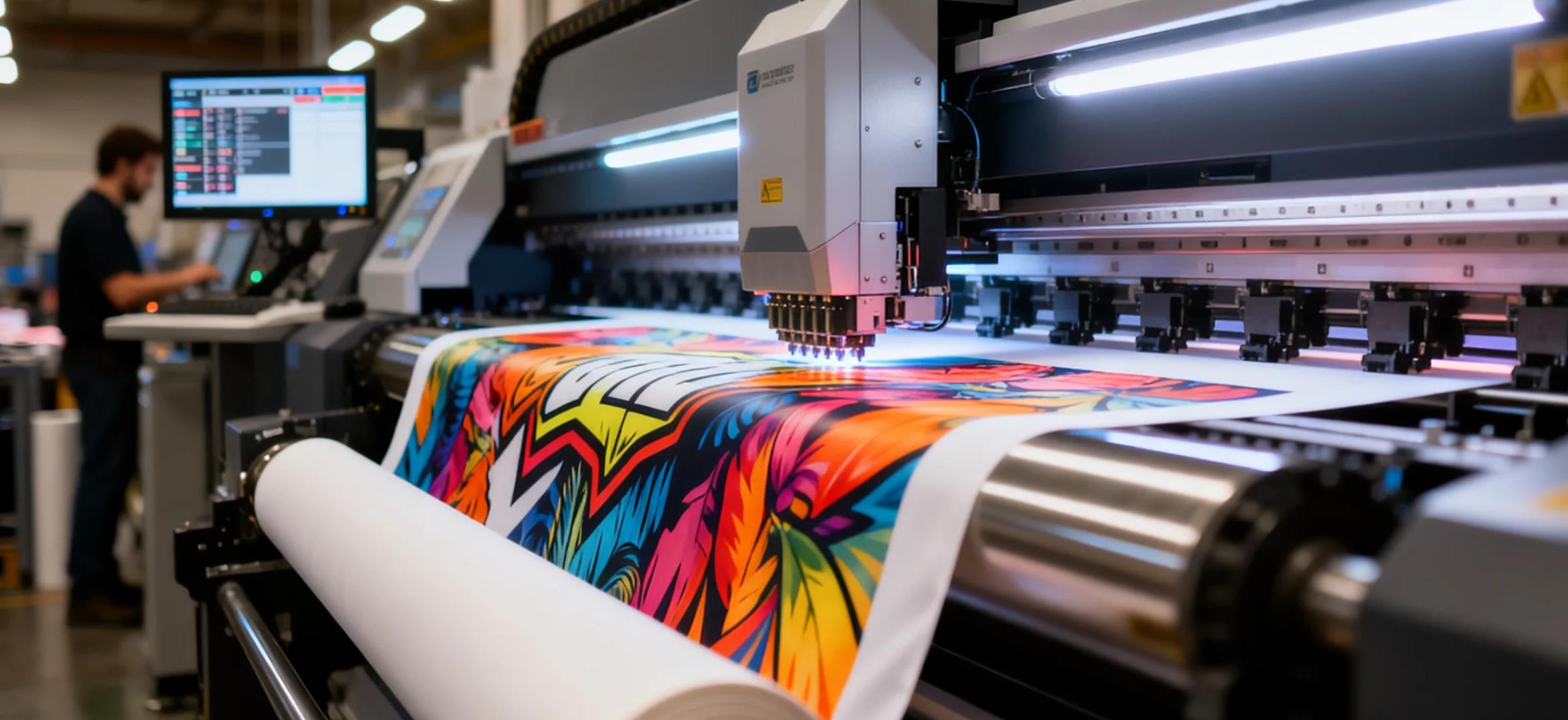
Market Overview: Sustained Growth Across All Segments
The dye sublimation printing market—a core technology within the broader heat transfer sector—is experiencing particularly robust expansion. According to The Business Research Company, the global dye sublimation printing market is projected to grow from
The roller heat transfer press market is also on a strong growth trajectory. QYResearch data shows that global roller heat transfer press revenue reached
The sublimation transfer apparel market represents one of the fastest-growing segments, projected to surge from
Technology Evolution: From Equipment Competition to System Integration
The industry is witnessing a fundamental shift from standalone equipment competition toward integrated, system-level capabilities. In the thermal transfer overprinting (TTO) equipment segment—critical for flexible packaging and variable data printing—the global market is valued at approximately
Under the Industry 4.0 framework, TTO equipment is accelerating integration with MES and ERP systems, enabling real-time production data retrieval and automatic print content updates. High-resolution printheads and multi-mode control technologies now support complex information output including QR codes and anti-counterfeiting marks, while the introduction of edge computing and visual inspection enables online verification and error alerting capabilities.
The food and beverage industry remains the largest demand source for TTO equipment, accounting for nearly 49% of the market, with high-speed packaging lines (exceeding 600 packages per minute) driving continuous innovation. The pharmaceutical industry places greater emphasis on GMP compliance and anti-counterfeiting traceability, requiring marks that withstand disinfection and leave no residue.
Green Manufacturing: A Strategic Imperative
Environmental sustainability has become a strategic imperative across the heat transfer industry. Major manufacturers are increasingly adopting eco-friendly inks and bio-based materials, with industry leaders securing dual international certifications such as bluesign® and OEKO-TEX® ECO PASSPORT to meet stringent safety and environmental standards. This trend is particularly significant for applications in swimwear, high-end home textiles, and sportswear, where safety and health requirements are most demanding.
The industry's shift from traditional dyeing toward digital and environmentally sustainable processes offers compelling advantages: heat transfer technology requires zero water consumption compared to approximately 0.49 tons per 100 meters of fabric for traditional screen printing, while delivering superior pattern expression and color vibrancy.
Industry Challenges and Future Outlook
Despite the optimistic growth outlook, the industry faces notable challenges. Equipment homogenization competition is intensifying, putting downward pressure on mid-to-low-end product pricing, while certain core components remain dependent on imports, compressing profit margins. The potential shift in the US tariff framework has also introduced significant volatility risks to global markets.
Looking ahead, manufacturers with advanced manufacturing capabilities, system integration expertise, and strong brand presence will gain competitive advantages. The industry as a whole is moving toward premiumization, intelligence, and scale. Emerging manufacturing regions in Southeast Asia and South Asia are expected to unlock new growth potential, while India's heat transfer printer market is projected to grow at the fastest rate of 11.6% from 2026 to 2033, driven by increasing demand from the FMCG, food, and pharmaceutical sectors.
The Asia-Pacific region continues to serve as a major engine of thermal printing adoption due to high-volume manufacturing, rapid e-commerce growth, expanding logistics networks, and dense retail ecosystems across China, India, Japan, South Korea, and Southeast Asia. As the global textile and apparel industry continues its digital and sustainable transformation, heat transfer technology manufacturers are well-positioned to capture expanding market opportunities worldwide.


Phone: +86 13738991178
WhatsApp: +86 15307796319
Email: luguow@yizhaomachine.com
Address: No.2, Block A13, Xinpan Road, Shangxi Town, Yiwu City, Zhejiang Province, China


